
Just fit 4 cholesterol-fighting foods into your diet portfolio to improve your cholesterol level.
The Portfolio Diet is fundamentally a plant-based diet, closely resembling a vegetarian diet, as it emphasizes whole plant foods like fruits, vegetables, nuts, whole grains. When eating this combination or “portfolio” of foods and nutrients everyday, it can:
- lower your LDL or bad cholesterol.
- lower your blood pressure.
- reduce your risk for heart disease and stroke.
- help improve blood sugar control.
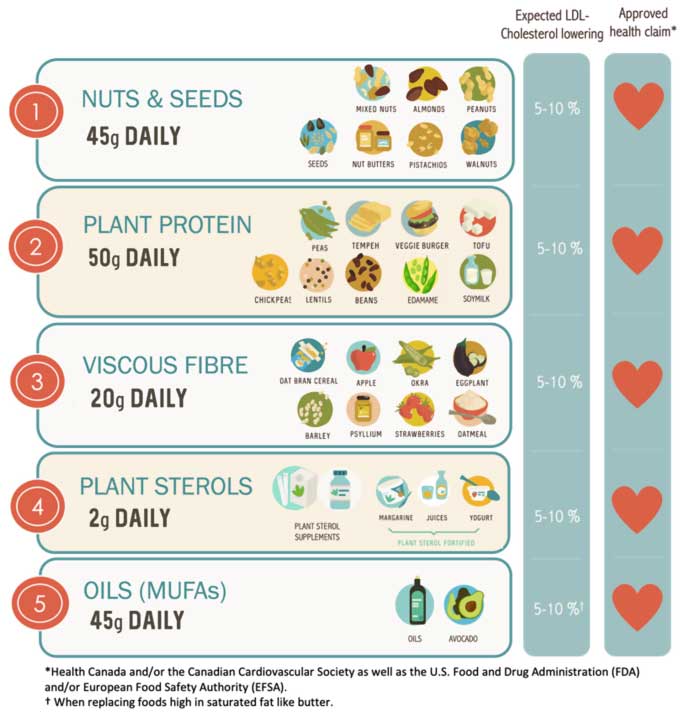
Photo: Canadian Cardiovascular Society
The Portfolio Diet is designed to lower cholesterol rather than promote weight loss. David J. A. Jenkins, a professor of nutritional sciences, prefers to call it a dietary portfolio instead of a diet plan. He emphasizes that people should not focus on one type of healthy food but rather diversify their nutritional choices to effectively manage cholesterol levels. This approach encourages a shift from looking at individual foods to combining various foods that offer multiple health benefits.
How It Works
The concept of the Portfolio Diet is straightforward. Simply replace certain foods in your diet with other ingredients that have been shown to lower cholesterol levels.
For example, replace meat and dairy with soy protein like tofu, tempeh, soy milk, and soy-based deli meats or burgers. Instead of using butter, the Portfolio Diet encourages using margarine enriched with plant sterols. Plant sterols are naturally occurring plant compounds shown to reduce your body’s absorption of cholesterol – found in nuts, seeds, vegetable oils, grains, fruits, and vegetables
Your diet should also include at least one serving of tree nuts per day, such as almonds, walnuts, or pistachios. Additionally, the Portfolio Diet promotes foods high in soluble fiber.
The “Complete Guide to the Portfolio Diet” is a great place to start. There are so many books out there it’s difficult to suggest just one.
4 Key Foods in the Portfolio Diet
The Portfolio Diet recipe focuses on four kinds of food:
- Nuts and seeds
- Soy-based foods
- As much viscous (sticky) fiber as possible. Food sources of viscous fiber include oats, barley, eggplant, okra, berries, and citrus fruit.
- Plant sterol-enriched foods. Sterol-fortified foods are common products like margarine spreads, orange juice, milk, yogurt, cheese, cereals, and breads that have added plant sterols or stanols.
These foods do not need to be consumed together in one meal; they are meant to be integrated throughout the day. A typical daily menu on the Portfolio Diet includes soy milk and oat-bran cereal for breakfast, oat-bran bread and bean soup for lunch, and a tofu stir-fry with vegetables for dinner, along with snacks like nuts or soy yogurt.
Foods to eat
On this diet, try to eat several servings of foods rich in soluble fiber, plant sterols, and soy protein each day, including nutrient-dense options like fruits, vegetables, nuts, seeds, and whole grains.
Here are some examples of foods to eat on the Portfolio Diet:
- Fruits: avocados, pears, apples, oranges, bananas, kiwi, peaches
- Vegetables: okra, eggplant, Brussels sprouts, broccoli, turnips
- Nuts: almonds, walnuts, macadamias, cashews, pistachios
- Seeds: flaxseed, sunflower seeds, chia seeds
- Whole grains: oats, quinoa, brown rice, barley
- Legumes: black beans, kidney beans, lentils, chickpeas, lima beans
- Soy protein: tofu, tempeh, soy milk, soy cold cuts, soy veggie burgers
- Healthy fats: margarine and vegetable oils enriched with plant sterols
Foods to avoid
Here are some foods to limit or avoid on the Portfolio Diet:
- Processed foods: chips, pretzels, fried foods, convenience meals, french fries, processed meats
- Refined carbs: white pasta, white rice, white bread, tortillas
- Sweets: cookies, cake, candies, baked goods
- Sugar: table sugar, honey, maple syrup, brown sugar
- Beverages: soda, sweet tea, sports drinks, energy drinks
Jenkins’s research involved a study with 46 participants who wanted to lower their cholesterol. They were given guidance on dietary choices and sample menus but not prepared foods. Results showed that about a third of the participants experienced a significant reduction in LDL cholesterol, with over a 20% decrease after six months. Another 31% saw a 15% drop, while others did not see any change, likely due to difficulties in following the diet. Those who adapted better at home succeeded more than those relying on pre-packaged foods or dining out.
Experts suggest the Portfolio Diet is effective for lowering cholesterol but may not be ideal for those looking to lose weight. Richard Milani, a clinical innovation officer, agrees that while this diet can effectively manage cholesterol, it is less focused on weight loss compared to other diets like the Mediterranean diet, which also includes some elements of the Portfolio Diet.
Jenkins points out that cholesterol-lowering medications can have side effects, so integrating the Portfolio Diet foods can optimize their effectiveness without increasing drug dosage.
| BREAKFAST | AFTERNOON SNACK |
| • 1 cup oatmeal with 2 dates, ¼ mango, 1 oz walnuts, and 1 tbsp flax or chia seeds • 1 cup unsweetened soy milk | • ½ cup edamame with a dash of salt |
| MORNING SNACK | DINNER |
| • Yogurt Parfait made with one 6-oz container of plain soy yogurt, 1 cup mixed berries, and ¼ cup unsweetened Muesli | • Veggie and Tofu Skewers made with 4 oz firm tofu stir-fried in Benecol, bell peppers, cherry tomatoes, and eggplant cooked in Benecol, all tossed with a marinade of 1 tbsp olive oil + 1 tsp balsamic vinegar • 1 cup cooked millet, quinoa, or barley |
| LUNCH | BEVERAGES |
| • Mushroom Barley Soup made with 1.5 cups low-sodium vegetable broth, 3/4 cup cooked whole grain barley plus 2 oz mushrooms, 1 carrot, and ½ onion sauteed, in Benecol, Italian seasonings, salt, and pepper • 1 slice oat bran bread with 1 tsp Benecol • 2 cups garden salad with 1 Tbsp olive oil and 1 tsp balsamic vinegar • 1 apple | • Herbal tea (freely) • Water (freely) |